

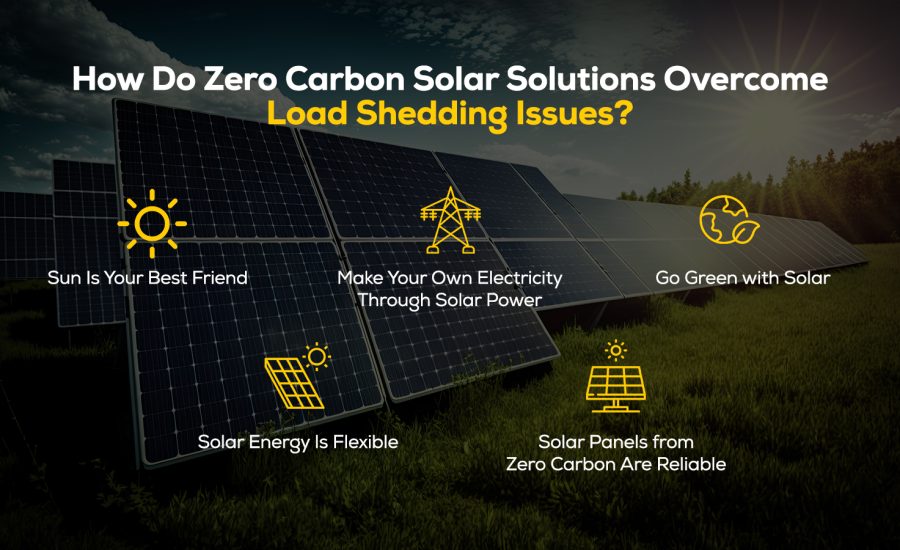
In 2026, Solar Solutions for Load Shedding Problems in Pakistan has become an expensive and disruptive reality. For many, a standard “On-Grid” solar system is no longer the answer because On-Grid systems shut down during power outages to prevent “islanding” (feeding power back into a dead grid).
To solve load shedding, you must look at Hybrid or Off-Grid solutions that incorporate energy storage.
1. The Best Solution: Hybrid Solar Systems
A Hybrid system is the gold standard for urban areas in 2026. It stays connected to WAPDA/K-Electric to save you money via Net Billing, but features a battery bank that kicks in the millisecond the grid goes down.
- How it works: During the day, solar powers your home and charges your batteries. Any excess is sold to the grid. At night or during load shedding, the system automatically switches to battery power.+1
- Key Advantage: Unlike On-Grid, you have Zero-Downtime. Your internet, lights, and fans won’t even flicker when the power goes out.
Recommended Hybrid Packages (2026 Estimates)
| System Size | Typical Load Supported | Est. Price (with Batteries) |
| 3kW Hybrid | 1 Fridge, 4 Fans, 10 Lights, 1 LED TV | Rs. 450,000 – 600,000 |
| 6kW Hybrid | 1 Inverter AC (1.5 Ton), 1 Fridge, 6 Fans | Rs. 850,000 – 1,100,000 |
| 10kW Hybrid | 2-3 ACs, Water Pump, Full House Load | Rs. 1,400,000 – 1,750,000 |
2. The Battery Factor: Lithium vs. Tubular
The battery is the “fuel tank” of your load-shedding solution. In 2026, the choice usually comes down to budget vs. longevity.
- Lithium Iron Phosphate (LiFePO4): The 2026 market leader.
- Pros: Lasts 10+ years (6,000+ cycles), charges 4x faster, and can be discharged to 90% without damage.
- Cons: High upfront cost.
- Tubular (Deep Cycle): The traditional choice.
- Pros: Cheap and widely available.
- Cons: Lasts only 1.5–2 years, heavy, and requires water maintenance.
Pro Tip: For load shedding, Lithium is better. If the power goes out twice in four hours, a Tubular battery won’t have time to recharge, but a Lithium battery will.
3. Top-Rated Hardware for Outage Protection
To ensure your system doesn’t fail when you need it most, look for these specific brands currently leading the Pakistani market in 2026:
- Inverters (The Brain): * Inverex (Nitrox Series): Highly resilient to local voltage fluctuations.
- Growatt / Solis: Excellent smart-app monitoring to track battery health.
- Deye: Known for superior “Parallel” capabilities if you want to expand later.
- Batteries (The Storage): * Tesla Powerwall 3 / Anker SOLIX X1: Premium, all-in-one “Smart” batteries.
- Narada / Pylontech: High-reliability rack-mounted Lithium options.
4. Designing for Load Shedding: The “Critical Load” Strategy
Don’t try to run your whole house on batteries unless you have a massive budget. Instead, ask your installer to wire a “Critical Load Sub-Panel.”
- Identify Essentials: Lights, fans, Wi-Fi, and fridge.
- Separate Heavy Loads: Move electric geysers, ovens, and non-inverter ACs to a separate circuit that stays OFF during load shedding.
- Automatic Transfer Switch (ATS): Ensure your inverter has a built-in ATS with a transition time of less than 10–20 milliseconds to protect sensitive electronics like computers.
Solar Solutions for Load Shedding Problems
Frequently Asked Questions (FAQs)
Q: Is solar energy worth the investment in 2026 given the new Net Billing policies? A: Yes. While the transition from Net Metering to Net Billing in many regions (including Pakistan) has reduced the “sell-back” rate, the cost of grid electricity has never been higher. Every unit you produce and consume yourself saves you the full retail rate. The focus in 2026 has shifted from selling power to maximizing self-consumption.
Q: What is the difference between N-Type TOPCon and older PERC solar panels? A: TOPCon (Tunnel Oxide Passivated Contact) is the 2026 industry standard. These panels offer higher efficiency (up to 25%), better performance in low-light/cloudy conditions, and a much lower degradation rate over time compared to older PERC (Passivated Emitter and Rear Cell) technology.
Q: Can a 5kW solar system run a 1.5-ton AC? A: Yes, during peak sunlight hours (typically 10:00 AM to 4:00 PM), a 5kW system generates enough power to run one 1.5-ton inverter AC along with basic household loads like fans and lights. However, running it at night would require a significant battery bank.
Q: How long do Lithium-Ion solar batteries last compared to Tubular batteries? A: In 2026, Lithium (LiFePO4) batteries typically last 8 to 10 years (approx. 6,000 cycles), whereas Tubular (lead-acid) batteries generally need replacement every 1.5 to 2.5 years. Although Lithium is more expensive upfront, its cost-per-cycle is much lower.
Q: Does solar work during a power outage or load shedding? A: Only if you have a Hybrid or Off-Grid system. A standard On-Grid system is designed to shut down during a power outage for safety reasons (islanding protection). If you want power during load shedding, you must install an inverter with battery backup.
Q: How often do I need to clean my solar panels? A: For optimal performance in urban or dusty environments, it is recommended to clean your panels every 2 to 4 weeks. Dust buildup can reduce efficiency by as much as 20–30%. Always use plain water and a soft brush; avoid harsh chemicals.
Q: What is “Net Billing” and how does it affect my savings? A: Net Billing is a system where your excess solar energy is “sold” to the grid at a lower wholesale price (e.g., Rs. 22/unit), while the energy you pull from the grid is “bought” at the high retail price (e.g., Rs. 70/unit). This makes having a battery essential, as it’s better to store your own power than to sell it cheap and buy it back expensive.
Conclusion
If your main problem is load shedding, do not buy an On-Grid system. You will be left in the dark despite having panels on your roof. A Hybrid system with Lithium batteries is the most cost-effective and reliable way to ensure 24/7 power in 2026.
Solar Energy: The Best Solution for Load Shedding Issues


[…] Latest Solar Panel Technology and Solar Solutions for Load Shedding Problems 2026 […]