

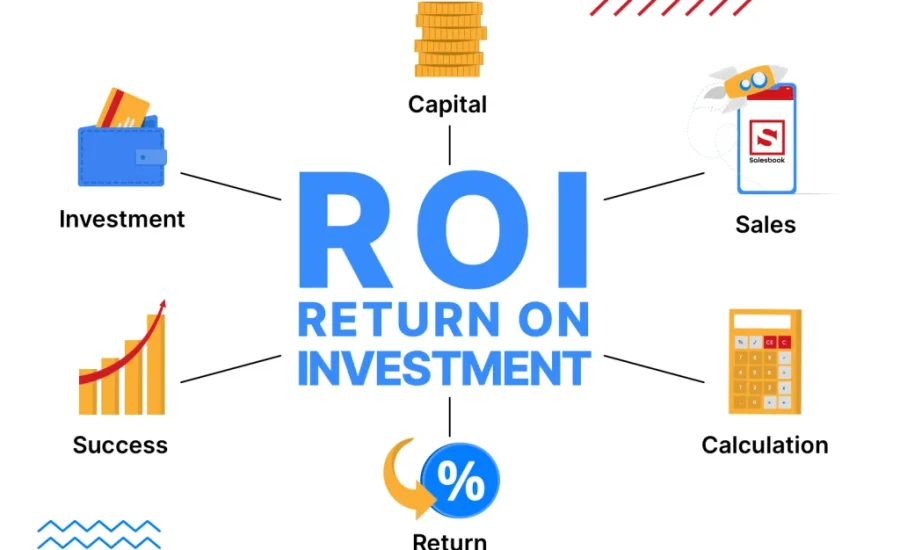
In 2026, the Return on Investment (ROI) for solar panels has become a tale of two worlds. While hardware prices have stabilized globally, the “Net Billing” policies introduced in early 2026 have fundamentally and changed how you calculate your profit.
Here is the breakdown of the solar ROI landscape as of February 2026.
1. The ROI Formula: Beyond Simple Payback
In 2026, the industry has moved away from the simple “Payback Periods” (years to break even) toward Lifetime ROI, which treats solar as a financial asset.
The Standard Formula:
$$ROI\ (\%) = \frac{(Lifetime\ Savings + Incentives) – Total\ System\ Cost}{Total\ System\ Cost} \times 100$$
- Average 2026 ROI: Between 15% and 25% annually, depending on your region. This significantly outperforms standard savings accounts or many stock market indices.
- The “Profit” Phase: After your system pays for itself (usually within 2–6 years), every kilowatt-hour generated is pure profit for the remaining 20+ years of the panels’ lifespan.
For more information about 5 Marla vs 10 Marla vs 1 Kanal: Which Solar Package Saves You the Most in 2026?
2. Global ROI Comparison (2026 Data)
The speed of your return depends on heavily on local utility rates and sun hours.
| Country | Avg. Payback (Years) | Estimated 25-Year ROI | Key Driver in 2026 |
| Pakistan | 1.2 – 2.5 Years | 800% – 1,000% | Rs. 75+ utility rates vs. cheap labor. |
| UK | 6.0 – 8.0 Years | 300% – 450% | High self-consumption & battery use. |
| USA | 5.0 – 9.0 Years | 400% – 600% | 30% Federal Tax Credit (ITC). |
| Australia | 3.0 – 5.0 Years | 600% – 750% | High sun intensity & low hardware costs. |
3. The “Net Billing” Factor: A 2026 Game Changer
The most significant change in this year is the widespread shift from Net Metering (1:1 unit exchange) to Net Billing.
- The Old Way: You sold 1 unit to the grid and got 1 unit back for free at night.
- The 2026 Way: You sell excess units to the grid at a Wholesale Rate (e.g., Rs. 11/unit) but buy them back at a Retail Rate (e.g., Rs. 70/unit).
- Impact on ROI: If you don’t have a battery, your ROI slows down. To keep your ROI high, you must maximize self-consumption—using your own power during the day or storing it in a battery for the evening.+1
Return on Investment (ROI)
4. Factors That Accelerate Your ROI
- Self-Consumption Rate: The more solar power you use directly (instead of selling to the grid), the faster your system pays for itself.
- Energy Price Inflation: If utility rates rise by 5% annually, your solar ROI increases proportionally because your “avoided cost” grows.
- High-Efficiency Modules (TOPCon): In 2026, N-Type TOPCon panels produce roughly 5% more energy than older the panels in the same space, shortening the payback by several months.
- Maintenance: A system cleaned every 2 weeks has a 20% better ROI than a neglected, dusty system.
5. Is a Battery a “Drag” on ROI?
Historically, batteries were considered an expense that slowed down ROI. In 2026, this has flipped:
- Without Battery: You sell excess power cheap and buy it back expensive at night.
- With Battery: You store that “cheap” power and use it yourself at night, avoiding the expensive grid rates.
Conclusion
In 2026, a battery often shortens your breakeven point by 1–2 years because it protects you from high night-time utility tariffs.
For more update about Return on investment
Summary Table: 10kW System ROI (Pakistan 2026 Example)
| Metric | On-Grid (No Battery) | Hybrid (With Lithium Battery) |
| Initial Investment | Rs. 1,000,000 | Rs. 1,450,000 |
| Annual Savings | Rs. 650,000 | Rs. 850,000 |
| Payback Period | 1.5 Years | 1.7 Years |
| 25-Year Net Profit | Rs. 15,000,000+ | Rs. 19,000,000+ |


%20of%20Solar%20Panels(2026)&media=https://sunlightsolarenergy.clixurasolution.com/wp-content/uploads/2026/02/what_is_ROI-1024x706-1.webp)
[…] Return on Investment (ROI) of Solar Panels(2026) […]