

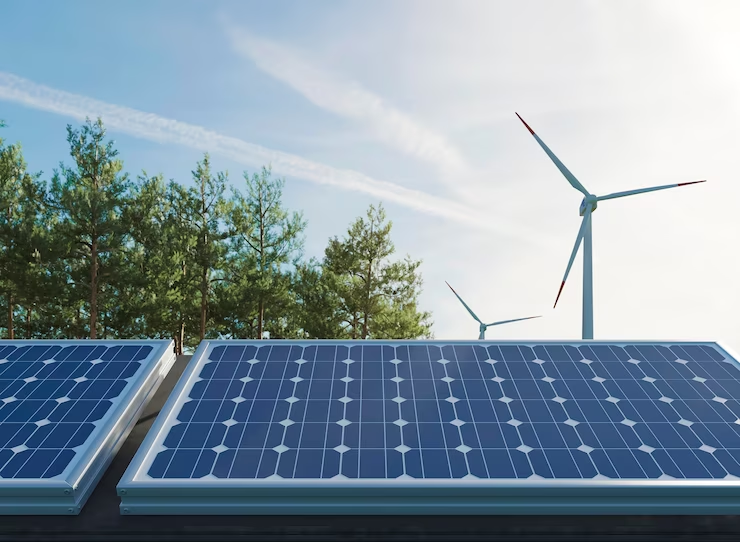
In 2026, the debate between On-Grid and Off-Grid for a5 Marla Home Solar Setup in Pakistan has shifted dramatically due to NEPRA’s transition from Net Metering to the Net Billing framework.
For a typical 5 Marla house requiring a 5kW system, the choice is no longer just about cost—it’s about how you manage the “energy gap” between solar generation and grid consumption.
Why 2026 Is the Best Time to Go Solar
1. The 5kW Setup: Cost Comparison (2026 Estimates)
| Feature | On-Grid (Grid-Tied) | Off-Grid (Independent) | Hybrid (The Middle Ground) |
| Upfront Cost | Rs. 550,000 – 700,000 | Rs. 950,000 – 1,200,000 | Rs. 850,000 – 1,050,000 |
| Batteries | None | Heavy (Lithium/Tubular) | Moderate (Backup only) |
| Net Metering | Included (Net Billing) | No | Included (Net Billing) |
| Load-Shedding | System shuts down | Full power during outages | Power for essential loads |
| ROI (Payback) | 1.5 – 2 Years | 4 – 5 Years | 2 – 3 Years |
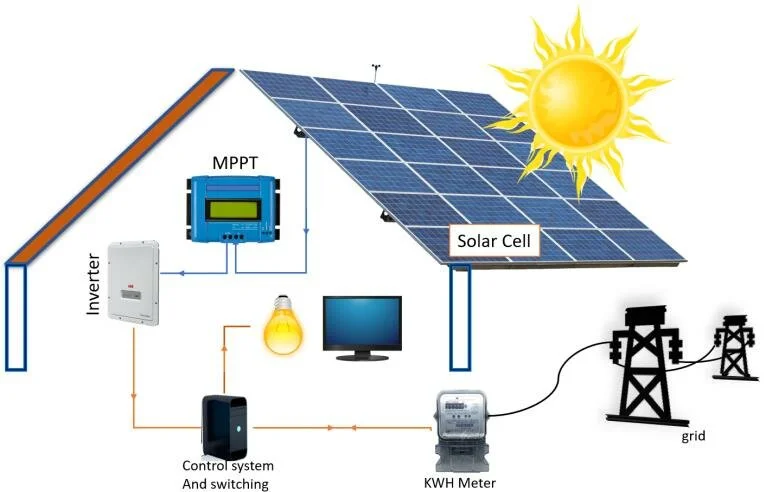
2. On-Grid: The “Budget-Friendly” Choice
In 2026, On-Grid systems remain the cheapest to install because they don’t require expensive battery banks.
- The Benefit: Lowest initial investment. It’s perfect if your primary goal is to slash your monthly bill to near zero.
- The 2026 Catch: Under the new Net Billing rules, the grid buys your excess units at a low rate (approx. Rs. 11–26) but sells them back to you at the full peak rate (Rs. 70+).
- Verdict: Best for areas with zero load-shedding where you can use all your solar power during the day.
3. Off-Grid: The “Freedom” Choice
An Off-Grid system for a 5 Marla home is rare in cities but vital in remote areas.
- The Benefit: Total independence. You are immune to WAPDA/K-Electric price hikes and load-shedding.
- The Reality: For a 5 Marla home, the battery bank alone can cost as much as the panels. You also “lose” energy once your batteries are full, as you can’t sell the excess back to the grid.
- Verdict: Only worth it if you live in an area with unreliable or no grid access.
4. The Hybrid Winner: Why 2026 Favors This Setup
For a 5 Marla house, the 5kW Hybrid System is the most strategic investment this year.
- Smart Arbitrage: In 2026, smart hybrid inverters (like Nitrox or Huawei) prioritize charging your batteries with “free” solar during the day. You then use that stored power during Peak Hours (6 PM – 11 PM), avoiding the most expensive grid rates.
- Backup: It provides 4–6 hours of backup for fans, lights, and a fridge during load-shedding.
5. Financial Verdict: Which Is Worth It?
- Highest Financial Return: On-Grid is still the winner for pure cash savings because of the low entry cost.
- Best Value for Lifestyle: Hybrid is the recommended choice. In the 2026 economy, the peace of mind of having electricity during an outage, combined with the ability to “net bill” your excess, outweighs the extra Rs. 200,000–300,000 spent on a small battery bank.
Pro-Tip for 5 Marla Owners:
If you choose a Hybrid or On-Grid system, ensure your installer uses N-Type Bifacial panels (e.g., Jinko Tiger Neo or Longi Hi-MO 7). These panels are the 2026 standard and offer better performance on the limited roof space of a 5 Marla house.
Conclusion
The year 2026 marks the end of the “easy era” of solar in Pakistan and the beginning of the “Smart Energy Era.” The transition from Net Metering to Net Billing has fundamentally changed the math: solar is no longer a passive way to earn credits from the government, but an active tool for household independence.
- For 5 Marla owners, the goal is Hybridization. A 5kW system with even a small battery bank is now more valuable than a 10kW On-Grid system because it allows you to bypass the expensive evening grid rates.
- For 10 Marla and 1 Kanal owners, the focus is Efficiency and Storage. Investing in N-Type Bifacial panels and high-capacity Lithium storage is the only way to maintain the 2-year ROI that Pakistanis have grown accustomed to.
Despite the regulatory shifts and the recent price hikes in panels (now averaging Rs. 33–40 per watt), solar remains the most effective hedge against an unstable and expensive national grid. In 2026, the best solar package isn’t the biggest one—it’s the one most accurately matched to your family’s actual consumption patterns.
5 Marla Home Solar Setup: On-Grid vs. Off-Grid Costs in Pakistan
Frequently Asked Questions (FAQs)
Q: Has Net Metering officially ended in Pakistan in 2026?
A: Yes. As of February 9, 2026, NEPRA has officially replaced the 2015 Net Metering Regulations with the Net Billing Regulations 2026. This shifts the model from a “unit-for-unit” exchange to a monetary credit system where you sell excess power at the National Average Energy Price (~Rs. 8–11) but buy from the grid at full retail rates (~Rs. 60–75).
Q: I already have solar installed. Will my bill increase under the new rules?
A: Currently, there is a legal and political battle over this. While the new law initially shifted everyone to Net Billing, the Prime Minister issued a stay on February 12, 2026, directing the Power Division to protect existing contracts. For now, existing users may retain their old rates until their 5-year or 7-year contracts expire.
Q: Is it still worth installing solar in 2026 despite the new policy?
A: Yes. While the “sell-back” profit has decreased, the “avoidance” cost has never been higher. Every unit you generate and consume yourself saves you Rs. 70+. The focus in 2026 has simply shifted from “selling to the grid” to “maximum self-consumption” via batteries.
Q: Which battery is best for a 10 Marla house in 2026?
A: Lithium-Ion (LiFePO4) is the gold standard. While a 5kW Lithium bank costs roughly Rs. 250,000–400,000, it lasts 10 years and allows you to use your solar energy at night, which is the only way to achieve a “zero bill” under the new Net Billing rules.
Q: Can I install a system larger than my sanctioned load?
A: No. Under the 2026 regulations, your solar system capacity cannot exceed your sanctioned load. If you have a 5kW meter, you can only install up to a 5kW solar system unless you apply for a load extension first.


[…] As we move toward a more decentralized grid, those who own their power generation will be the most protected from the volatile energy markets of the future. The 2026 market offers a perfect balance of high-efficiency hardware (like 450W+ panels) and stable government incentives, making it an ideal window for transitionFor any update about 5 Marla Home Solar Setup: On-Grid vs Off-Grid Costs in Pakistan […]